On 5 September 2026, The Korea Herald published a feature on Haesol Choi and the minhwa tattoo work he makes at Onsil. The piece is titled Minhwa, inked and was written by Hong Yoo for the paper’s culture desk. You can read it here: Minhwa, inked — The Korea Herald.
This note is not a reprint. The article belongs to the newspaper, so what follows is a short studio record and a pointer to the work. It is written by the studio, not by Haesol.
The interview day
The interview took place at the Onsil studio in Gwangjin-gu, Seoul, on 11 August 2026.
Two lines from the article say what the work is about more directly than we could. “When I asked myself how I could become a competitive tattooist with a unique identity, the answer was obvious: working with something Korean,” Haesol told The Korea Herald. And on meaning: “The real meaning should go in the heart and the head, not on the skin,” he said. (Both quoted from Minhwa, inked, The Korea Herald, 5 September 2026.)
Two catalogued pieces close to its themes
The article’s photographs show a Hojakdo tattoo and a dokkaebi design. Two other catalogued works from the same folk-painting tradition are not among its photographs.
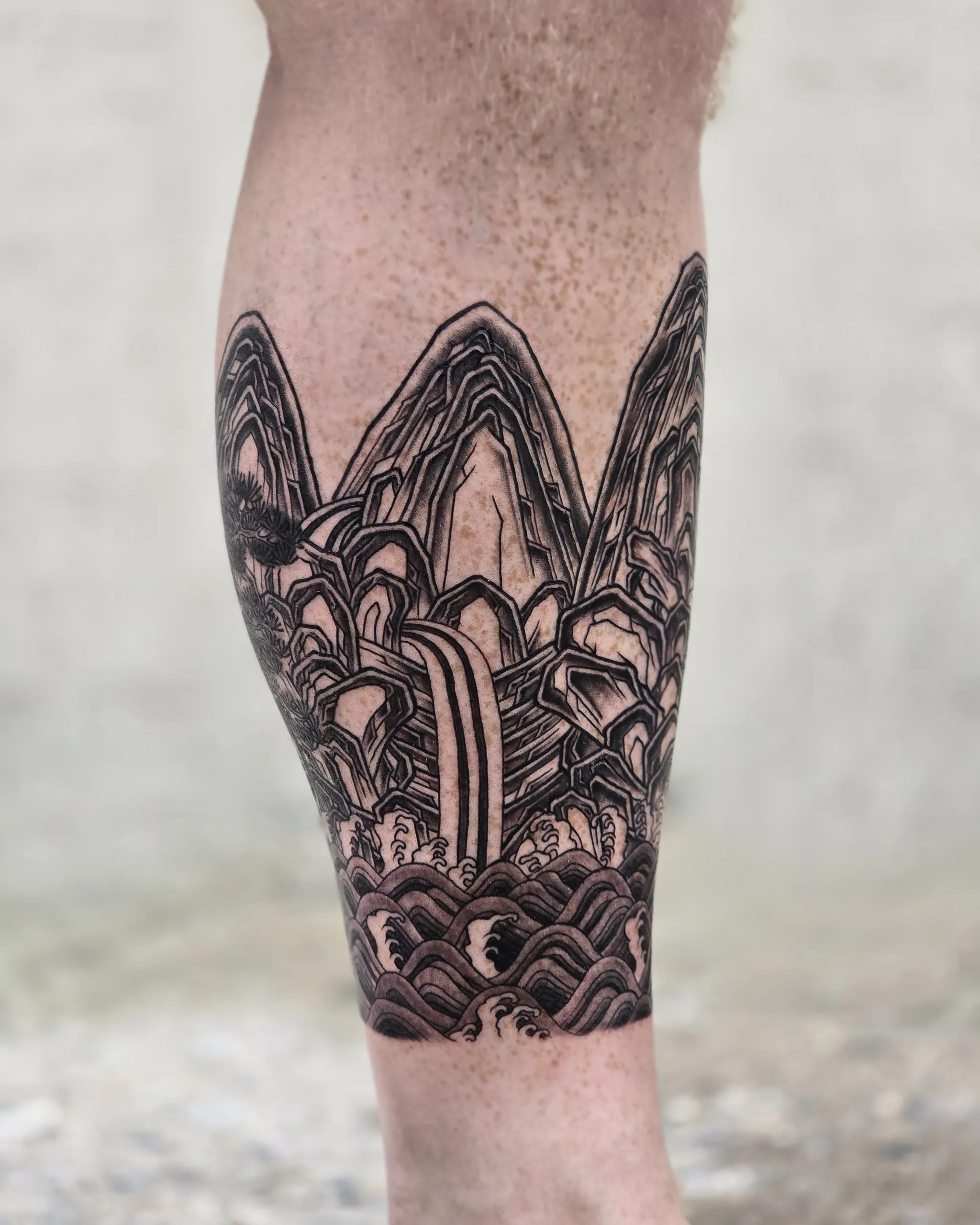
Five Peaks Landscape is based on Ilwolobongdo, keeping the five peaks, pine trees, waterfalls and waves in a composition that wraps around the calf. Haesol’s own note on the catalogue page explains the composition and the client’s reason for choosing it.
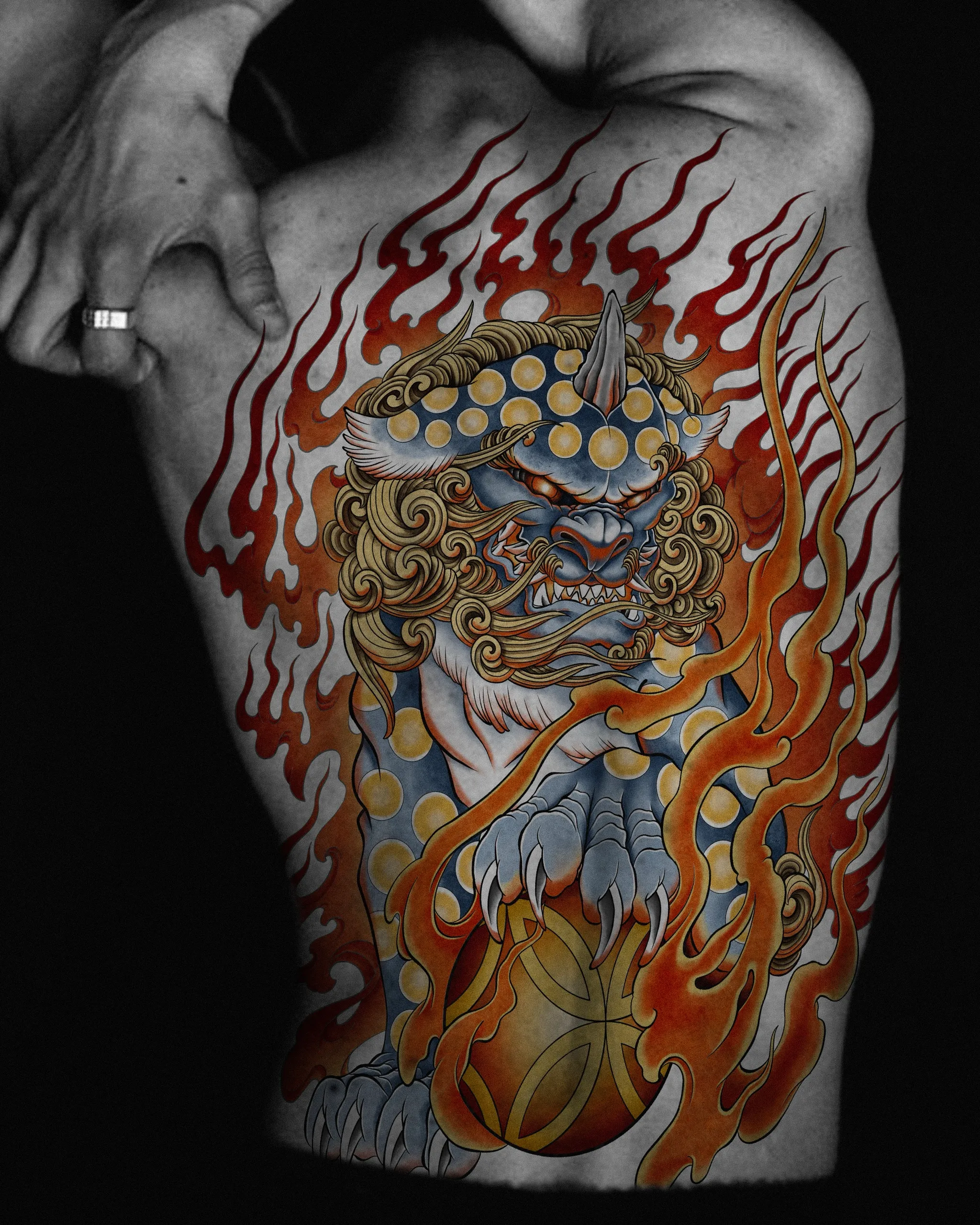
Haetae expresses the energy of fire through a traditional guardian figure. The catalogue page carries Haesol’s statement on how the face, claws, mane and flames were composed.
Where this sits
The Korea Herald feature joins the iNKPPL profile from July 2026 on the studio’s press page. For the broader background on the genre, the Korean traditional tattoo guide covers motifs, symbolism and how a commission works.