Korean Birds-and-Flowers Tattoo by Onsil — Hwajodo (花鳥圖) in the Minhwa Tradition

한국 화조도 타투 · 새와 꽃의 도상

Korean birds-and-flowers tattoo (Seoul) by Onsil Ink — a Seoul tattoo studio led by artist Haesol Choi (최해솔) — works the hwajodo (화조도, 花鳥圖, "flower-and-bird painting") tradition of Korean folk painting: bird-and-flower pairings carrying readings of conjugal harmony, purity, and seasonal renewal. Four works currently catalogued: lotus and kingfisher (a moment after the catch), sparrow and plum blossom (just before the season turns), peacock (before the feathers unfold), and pheasant (a fortune symbol). Scale ranges 12–18cm+, single session 1–4 hours. Consultation in EN/KR, by appointment.

Symbolism

Hwajodo (화조도) translates as "birds-and-flowers." In Korean folk painting (minhwa, 민화) it is one of the eight principal motif families — bird-and-flower pairings carrying specific symbolic readings: paired mandarin ducks for conjugal harmony, magpies among plum branches for joyful news, the lotus and kingfisher for purity-and-stillness, peacock and pheasant for prosperity and fortune. Where most other minhwa genres carry a single symbolic weight, hwajodo carries pairings — the bird selects the season, the flower selects the wish, and the composition together holds love, partnership, or seasonal renewal.

Korean tradition reads hwajodo as the most domestic of the eight motifs — the painting hung in private rooms, the bridal screen behind a wedding ceremony, the spring-flower panel marking the year's turn. This distinguishes it from the protective talisman of kkachi-horangi (magpie-and-tiger), the cosmic axis of irwolobongdo (sun-moon-five-peaks), or the longevity sequence of sipjangsaengdo. When the hwajodo reads as a tattoo, it carries that same intimate register: pieces sized 12-18cm+, placed where the wearer can return to them privately — forearm, shoulder blade, ribs. Onsil works the bird-and-flower pair when the wearer wants partnership or seasonal renewal, and the solo-bird compositions (peacock, pheasant) when the wearer wants the fortune reading alone.

Haesol's statements

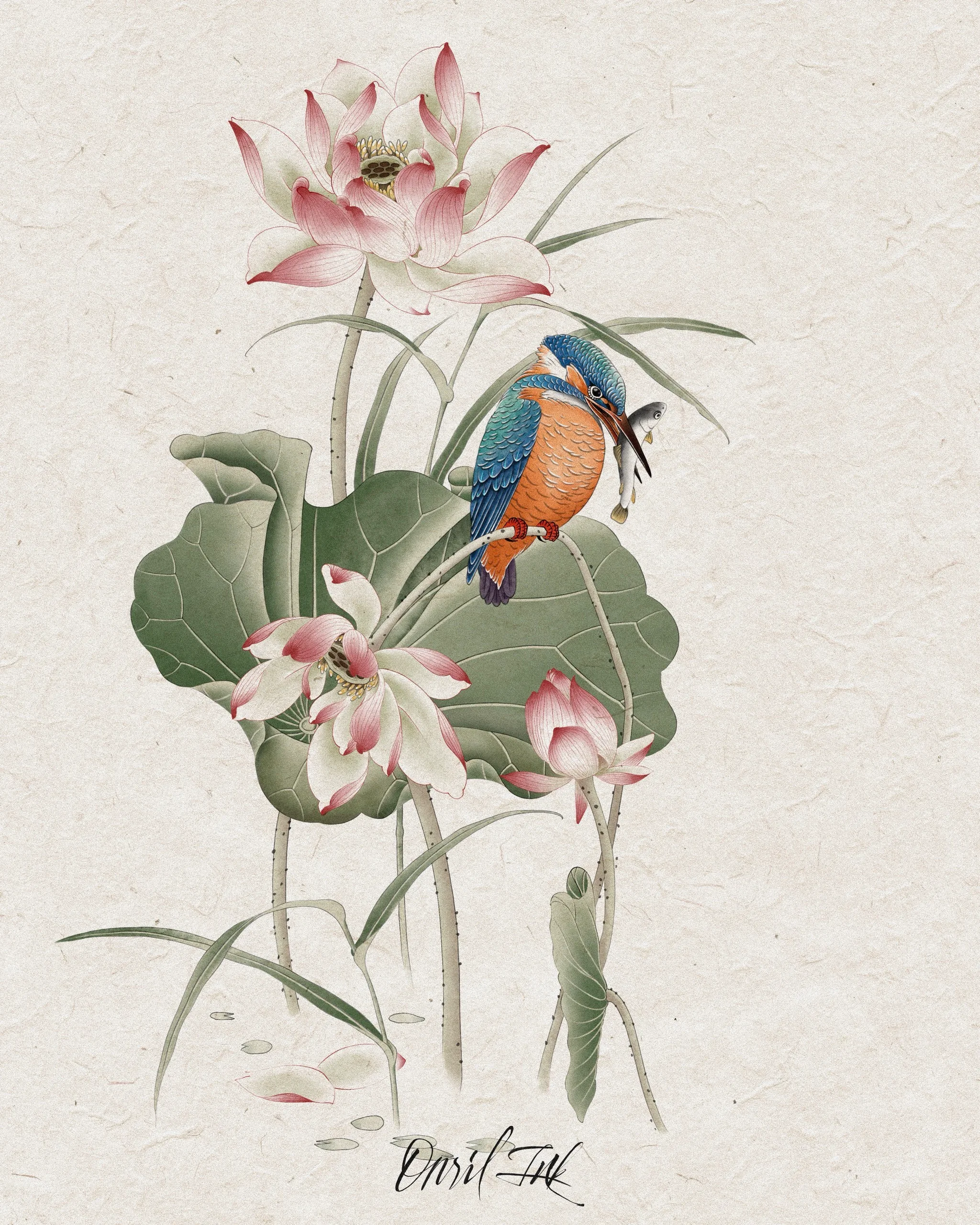
Lotus & Kingfisher (from 18cm) — Haesol Choi

The lotus has long been seen as a flower that remains clear, even as it rises from the mud. In a quiet pond, a kingfisher has just caught a fish. Within the stillness of the lotus, there is a trace of small movement. A quiet scene, but one that is alive.

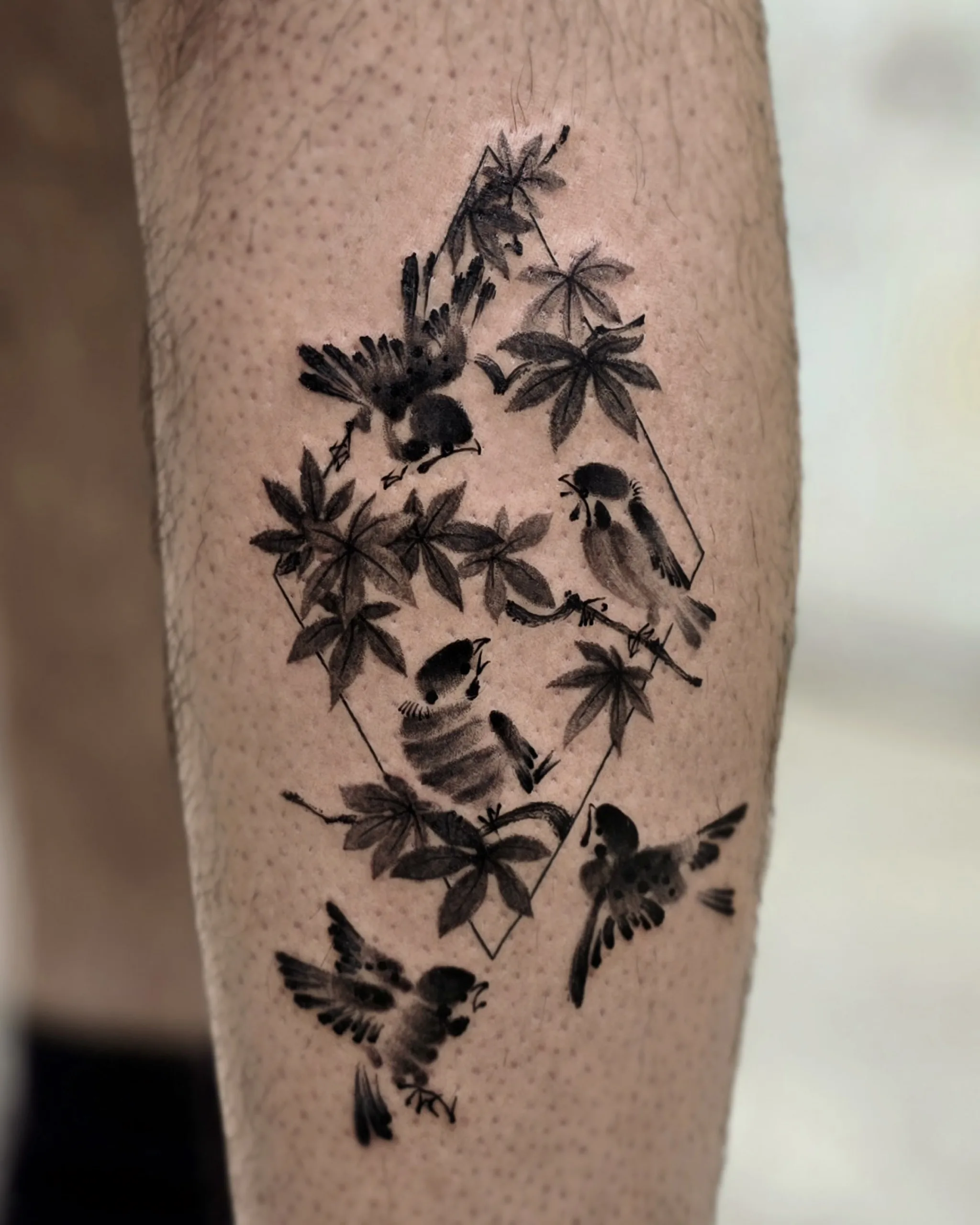
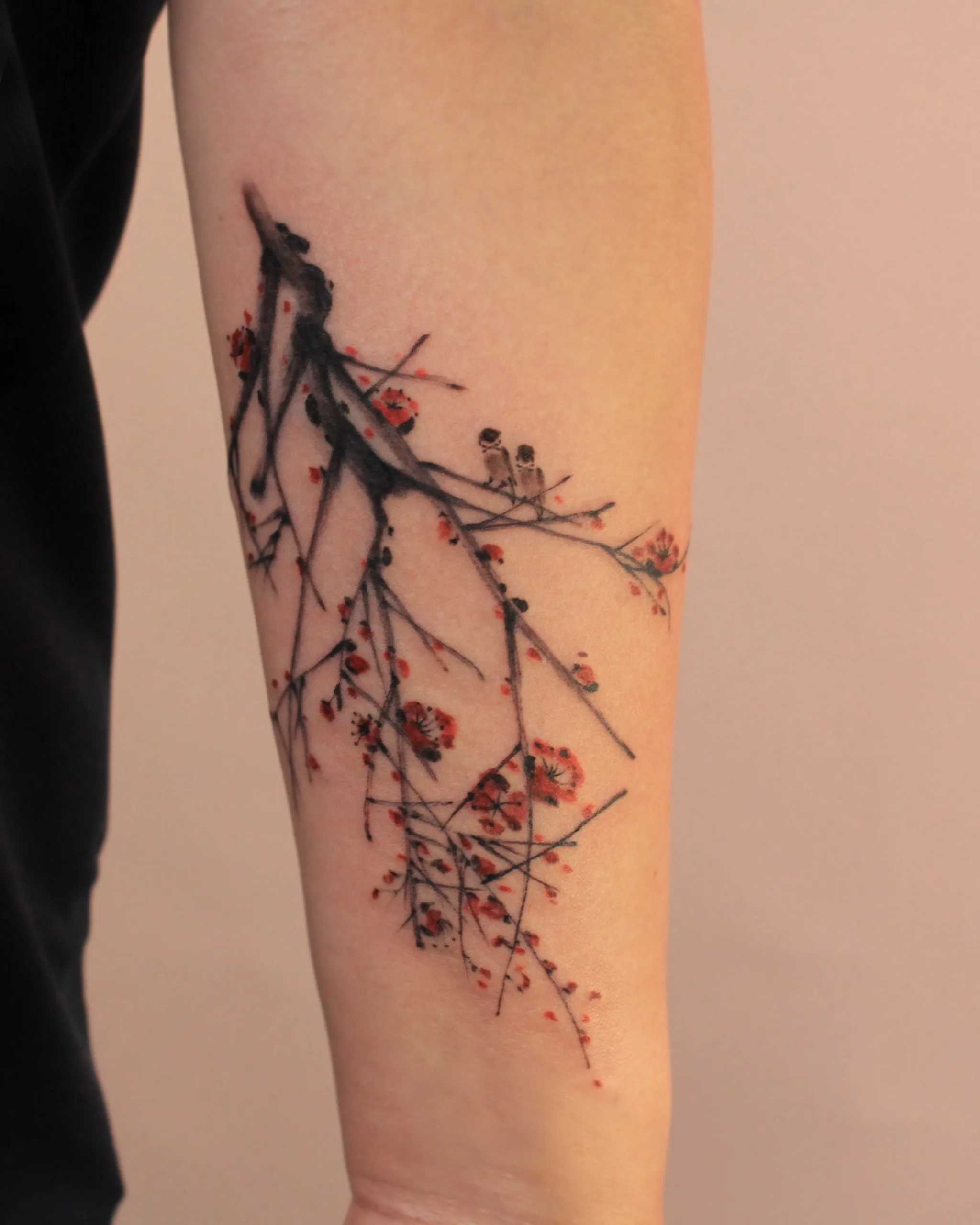
Sparrow & Plum Blossom (skin-only, from 12cm) — Haesol Choi

Plum blossoms are among the first to bloom after enduring the coldest season. They hold both the time of endurance and the moment of beginning again. The two sparrows resting above feel less like something surviving the cold and closer to a quiet warmth. A moment just before the season turns.

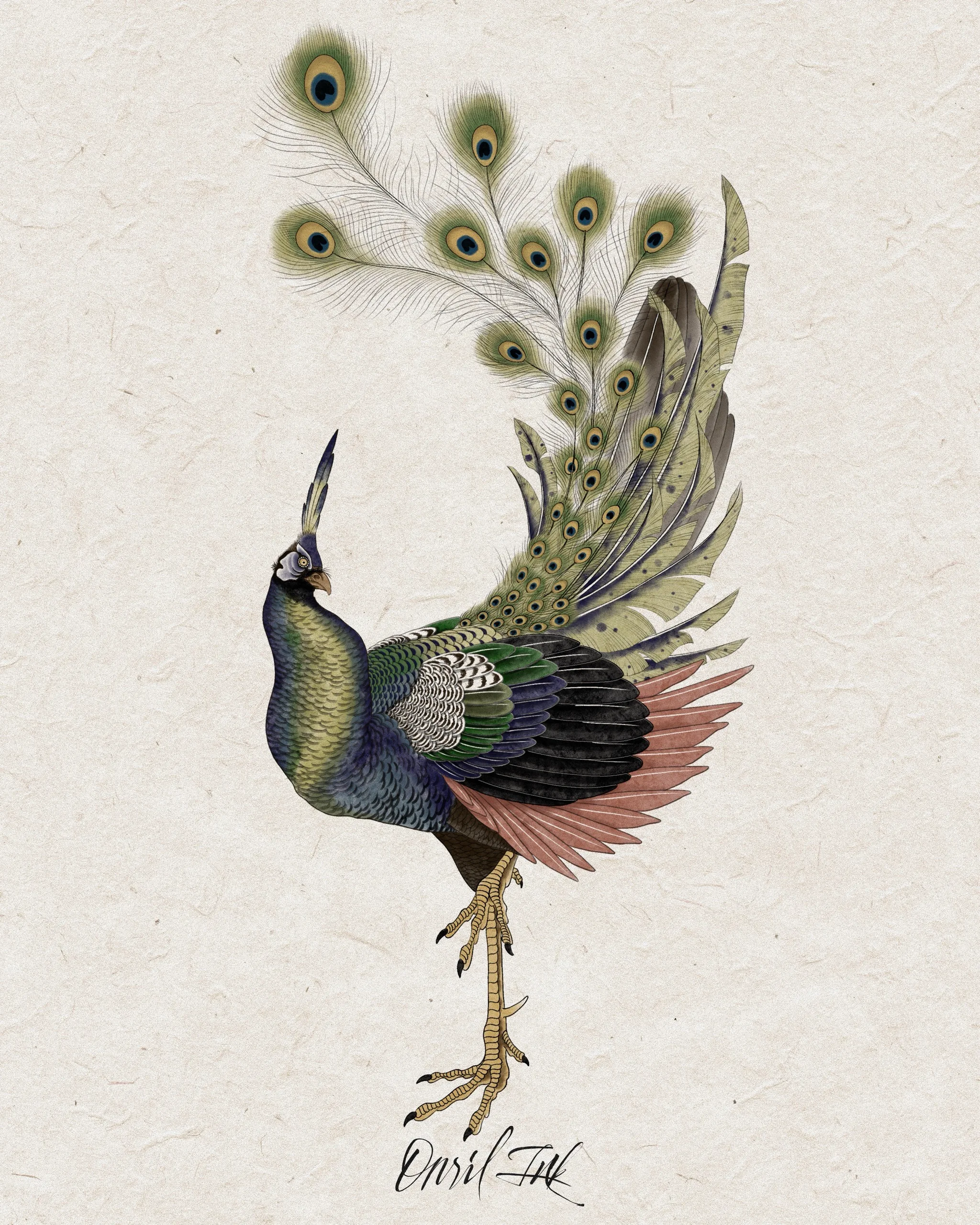
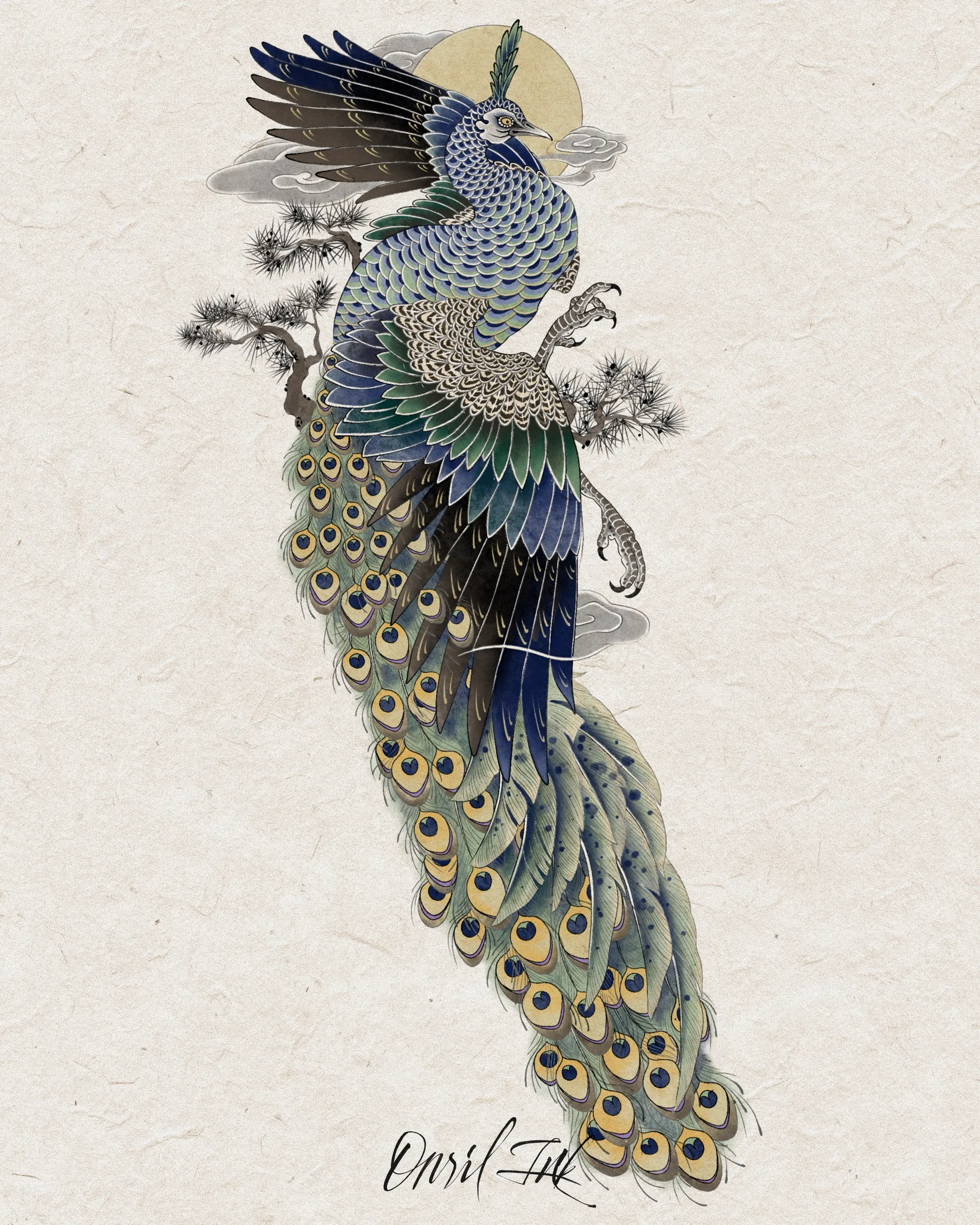
Peacock (from 18cm) — Haesol Choi

The peacock is a traditional symbol of prosperity and auspiciousness. Rather than a full display, this piece captures the moment just before the plumage unfolds. I focused on the balance of the body and the flow of the feathers, over sheer brilliance. What follows is left to the viewer's imagination.

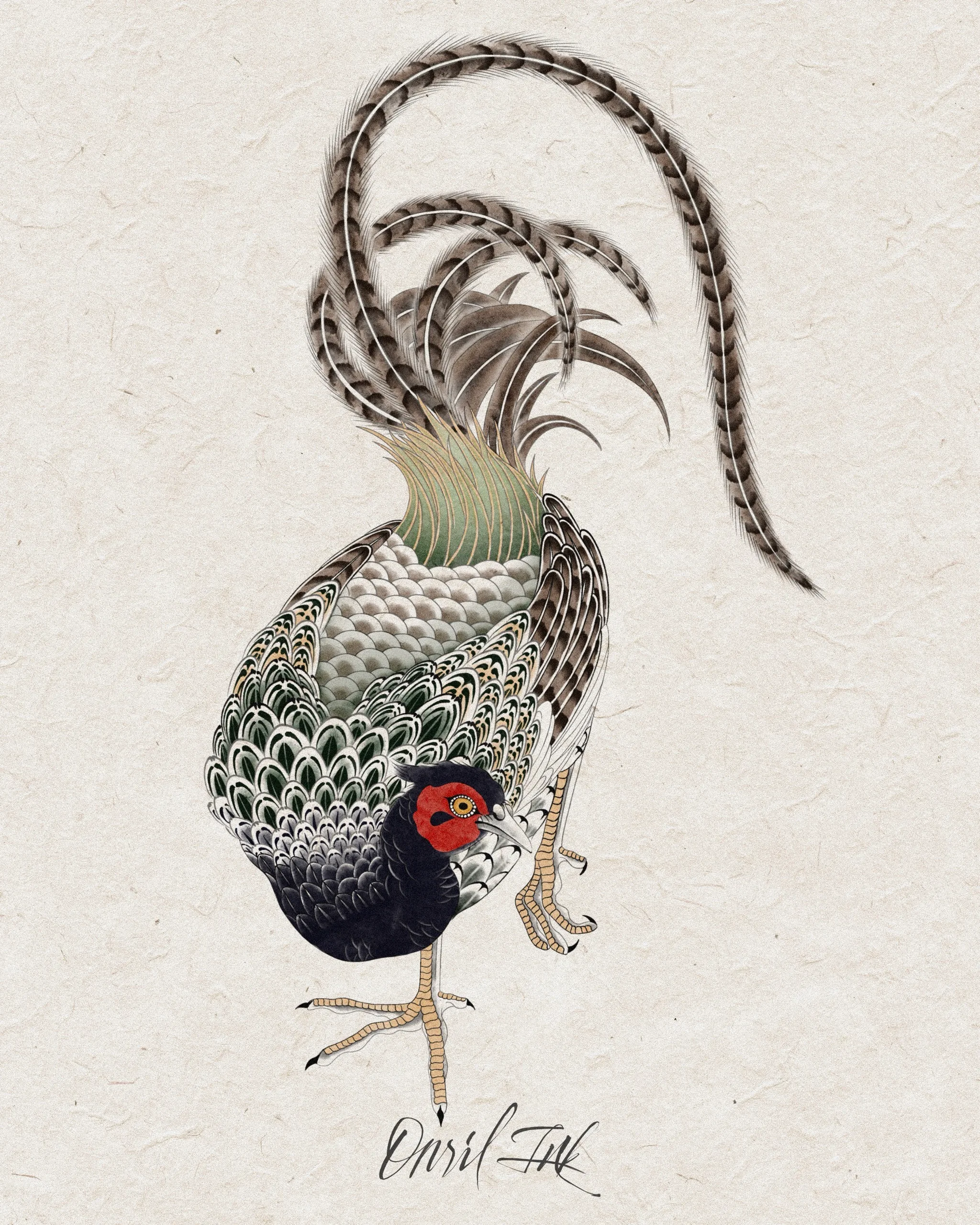
Pheasant — Symbol of Fortune (from 18cm) — Haesol Choi

A pheasant design. I arranged the long tail and feather flow to follow the vertical line of the body. Rather than focusing only on bright colors, I wanted the repeated feather patterns and linework to come forward first. I wanted to keep the quiet but distinct presence often found in traditional bird paintings.

Composition variations

Hwajodo carries two principal compositions. The bird-and-flower pairing (lotus & kingfisher, sparrow & plum blossom) holds the classic reading — bird selects the season, flower selects the wish. At 12-18cm+ this fits forearm, shoulder blade, or ribs. The flower acts as ground; the bird carries the movement (the kingfisher's catch, the sparrow's perch). Mono linework with selective color on the bird's plumage reads cleanly at this scale; full minhwa palette (muted greens, accent reds, selective gold) opens at 25cm+.

The solo-bird composition (peacock, pheasant) reduces the reading to the fortune carrier alone. The peacock holds the moment just before the plumage unfolds — body balance and feather flow over sheer brilliance. The pheasant holds the vertical line — long tail and feather pattern as the composition's spine. Both work at 18cm+ on forearm, calf, or thigh. Color sits comfortably here — minhwa pheasant pieces traditionally hold rich tail blues and greens — but mono reduction is equally available for wearers who want the brushwork-led reading.

Skin-only variants (sparrow & plum blossom) emphasise placement and scale on the body itself — the photo set is the design conversation, and the composition is redrawn to fit the wearer's chosen area. Haesol consults on placement, scale, mono-vs-color, and which bird-flower pairing fits the wearer's intent, during the design conversation before booking.
Frequently asked

What does hwajodo (birds-and-flowers) symbolize in Korean traditional tattoo?

Hwajodo (화조도) is the birds-and-flowers genre of Korean folk painting (minhwa). It pairs a bird and a flower — paired mandarin ducks for conjugal harmony, magpies among plum branches for joyful news, lotus and kingfisher for purity-and-stillness, peacock and pheasant for prosperity and fortune. Korean tradition reads hwajodo as the most domestic of the eight minhwa motifs — the painting of private rooms, bridal screens, and seasonal panels — distinct from the protective talisman of kkachi-horangi or the cosmic order of irwolobongdo.

Which bird-and-flower pairings does Onsil currently work?

Onsil currently catalogues four hwajodo works. Two are classic bird-and-flower pairings: Lotus & Kingfisher (purity and the moment of a catch) and Sparrow & Plum Blossom (endurance through winter and the season just before turning, skin-only). Two are solo fortune-carrying birds extended under the hwajodo umbrella: Peacock (the moment before the plumage unfolds) and Pheasant (long tail and feather flow as vertical composition). Crane appears separately in its own motif page, dual-lineage with sipjangsaengdo.

Is hwajodo tattoo mono or color?

Both. At 12-18cm+ Onsil typically uses mono linework with selective color on the bird's plumage — minhwa-traditional muted greens, accent reds, selective gold. The full minhwa palette opens at 25cm+ where the flower-and-bird composition has room for layered washes. Skin-only variants (sparrow & plum blossom) emphasise placement over palette. Haesol decides during the design conversation based on the wearer's intent and the placement chosen.

What sizes and body placements work best for hwajodo?

Bird-and-flower pairings (lotus & kingfisher, sparrow & plum blossom) start at 12-18cm and fit forearm, shoulder blade, or ribs — areas the wearer can return to privately, matching hwajodo's domestic register in Korean tradition. Solo-bird compositions (peacock, pheasant) start at 18cm and extend to forearm, calf, or thigh; the pheasant's vertical tail in particular benefits from limb placement. 25cm+ opens the full minhwa palette and works at back, ribs, or thigh.

How long does a hwajodo tattoo take at Onsil?

The skin-only Sparrow & Plum Blossom runs 1-3 hours single session. The standard hwajodo works (Lotus & Kingfisher, Peacock, Pheasant at 18cm+) run 3-5 hours single session. Larger compositions at 25cm+ with the full minhwa palette typically require 2 sessions spaced 4-8 weeks apart. The design phase runs weeks before the first session is booked.

Begin a hwajodo consultation

Tell Haesol which reading speaks to you — the lotus-and-kingfisher purity moment, the sparrow-and-plum seasonal turn, the peacock holding its plumage just before unfolding, or the pheasant carrying its fortune in the vertical line. The design phase takes weeks; we reply in EN/KR within 48 hours.

Begin a consultation